True friendship is a plant of slow growth.
–George Washington
http://www.whitehouse.gov/about/presidents/georgewashington

True friendship is a plant of slow growth.
–George Washington
http://www.whitehouse.gov/about/presidents/georgewashington
Our Friday Favorite this week comes again from the BBC (via Maria Grace). The Supersizers–journalist Giles Coren and comedian Sue Perkins–investigate the food (and fashion) of various time periods throughout history.
In this clip, they’re having a Regency experience at the former Carlton House (Prinny’s own residence). Maybe it’s just my bland Midwestern palate, but the only part of the meal that appeals to me is desert. Minus the cockerel testicles, of course 🙂
http://www.bbc.co.uk/programmes/b00bvr0t
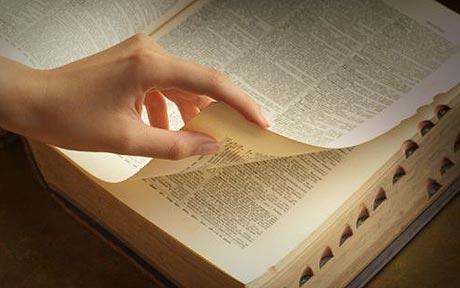
“Old Fogey. A nickname for an invalid soldier; derived from the French word fougeux, fierce or fiery.”
To know what is right and not do it is the worst cowardice.
–Confucius
http://plato.stanford.edu/entries/confucius/
My favorite historical item of the week comes from the BBC–a show that teaches history even as it mocks and makes fun (anybody else see the one with the singing King Georges?) :-). Time periods range from the Ancient Romans all the way up to World War II. You can visit the official website and watch clips form past episodes, or browse dozens and dozens of videos on YouTube.
http://www.bbc.co.uk/cbbc/shows/horrible-histories
Here’s a little taste:
“Foul language, or abuse. Billingsgate is the market where the fishwomen assemble to purchase fish; and where, in their dealings and disputes they are somewhat apt to leave decency and good manners a little on the left hand.”
All the knowledge I possess anyone can acquire, but my heart is all my own.
–Johann von Goethe
http://www.goodreads.com/author/show/285217.Johann_Wolfgang_von_Goethe
Well said!
I was going to do a post on titles, but M.M. Bennetts beat me to it, and is more entertaining!
I thought today that, for a change, I would do something useful. Indeed, I went so far as to decide that this blog must be both fun and accurate.
(I even tried to contract those two words into one for this purpose: Fun + accurate = fu…Yes, yes, stopping now.)
Ehem.
Because, you see, there is this small matter which apparently requires clarification. For those who find it tricky.
And it is, as the bold letters at the top of this bijou blogette would suggest, to do with the use of titles. Which as I say appear to cause untold confusion in some quarters.
So I thought I’d do my best to lay it out clearly. For my friends… (Yes, that’s right, I do have friends.) …Who occasionally write about Englishy things, but get tripped up by this.
View original post 1,175 more words
“In this distinguished Service, you will carry a Rifle no heavier than a Fowling-Piece. You will knock down your Enemy at Five Hundred Yards, instead of missing him at Fifty.
On Service, your Post is always the Post of Honour, and your Quarters the best in the Army; for you have the first of everything; and at Home you are sure of Respect—because a BRITISH RIFLEMAN always makes himself Respectable.
GOD SAVE the KING! and his Rifle Regiment!”
—Wellington’s Rifles: Six Years to Waterloo with England’s Legendary Sharpshooters by Mark Urban
Who says you can’t learn things from fiction? I was first introduced to the 95th Rifles in Mary Jo Putney’s book The Bargain, where the hero was a wounded officer from that regiment. (Bernard Cornwell also uses them in his Richard Sharpe series.) I wouldn’t have thought anything else about it except that she included an author’s note and explained why she picked the 95th. I’m one of those strange souls who think history is a whole lot of fun, so I went right from the book to the computer and starting poking around the Napoleonic Wars and the 95th Rifle Regiment. It turns out they were quite different from the rest of their infantry brethren.
The first thing I noticed was that the men and officers of the Rifles wore green uniforms rather than the familiar red—not a huge revelation if one is familiar with the British Army, but a small surprise for me. Their belts and trim were black instead of the white of the other regiments. Recruitment advertisements touted these darker uniforms as more comfortable and easier to care for. In practice, they drew the ridicule of other units (at least in the beginning—once the Rifle Brigade had proved its value, the taunting slowed considerably).
Also, while most officers of the time were still purchasing their commissions and promotions, the majority of officers of the 95th were commissioned or promoted based on merit or seniority. “Soldiers of fortune” they called themselves, neither nobility nor gentry for the most part. Perhaps because of this, the Rifles were known as a more egalitarian outfit than their musket-bearing counterparts.
The biggest difference between the Rifles and the rest of the infantry, of course, was their weapon. While everyone else carried muskets, the 95th carried the Baker rifle which had grooves inside the barrel to spin the bullet as it was fired (you CSI fans and gun enthusiasts will recognize this as the “rifling”). The spinning increased accuracy immensely—like spiraling a football—allowing these soldiers to fight differently. Riflemen did not stand shoulder to shoulder and fire into a block of the enemy. Instead, they could fire individually and from standing, sitting, and kneeling positions, or even laying down, and were trained accordingly. They were, in fact, founded to emulate the sharpshooters of Continental Army and militias during the American Revolution. (There’s irony for you!)
The 95th Rifles went on to become wildly famous for their actions during the Peninsular War, being awarded regimental battle honors for Ciudad Rodrigo, Salamanca, Vittoria, The Pyrenees, Toulouse, and Waterloo, among others. Curiously, though, they were rarely awarded individual medals and recognition, though other soldiers in other units were regularly honored.


