
Jingle Brains
“A wild, thoughtless, rattling fellow.”

“A wild, thoughtless, rattling fellow.”
No, that’s not a typo. This article is not about Napoleon’s victories on the battle fields of Europe. It’s about his victory in the farmers’ fields in France.
With sugar beets.

Sugar beets (Beta vulgaris) are white, conical roots, with a rosette of leaves above ground. The leaves absorb sunlight and produce sugar by photosynthesis (remember your high school biology?). The sugar is then stored in the root—the part we dig up and process. Sugar beets are grown in temperate climates like Germany, France, the UK, and the northern US, rather than the tropical locales sugar cane prefers.
But what do they have to do with the self-proclaimed Emperor of France?
In 1806 Napoleon attempted to destroy British trade lines and weaken the country by banning the import of British goods into Europe (including those from Britain’s colonies). George III and his Parliament responded by ordering a blockade of all French ports. So the only goods Napoleon and his people were getting (legally) were those they could grow or make themselves. Since all of the sugar in use at the time came from plantations in the West Indies, that meant no sugar for France.
Yikes!
Sugar beets were already known at this time—in the mid-1700’s, a German chemist named Andreas Margraff discovered that the sucrose contained in the beet’s root was indistinguishable from the sucrose in sugar cane. One of Margraff’s students, Franz Karl Achard, later experimented with ways to extract the sugar from beets, and was successful (he’s now considered the father of the sugar beet industry).
So when France found herself sugarless in the first decade of the 1800’s, a starting point already existed for her scientists. In 1809, a commission repeated Achard’s experiments, producing two loaves of beet sugar. One of them was eventually passed on to Napoleon himself, who realized he held the answer to his problem (one of them, anyway). He ordered 32,000 hectares of sugar beets to be sown, and more than 40 small factories were built to process them. In January 1811, the order was upped to 100,000 hectares and licenses were given to build 334 factories throughout the French empire.
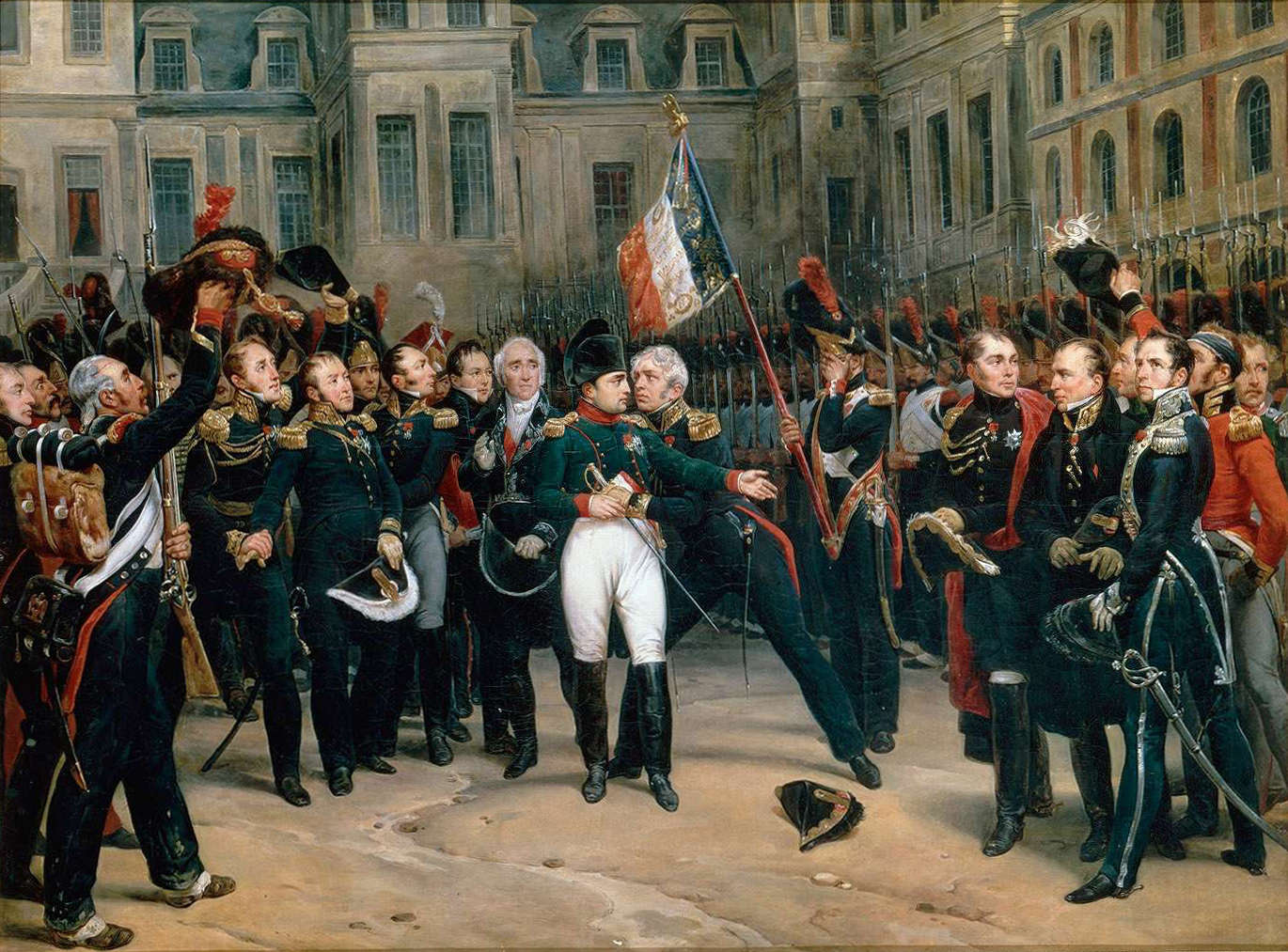
In 1813, however, the tide of the war turned. Napoleon was on the run, and the blockade was lifted. Cane sugar once again became readily available, and beet sugar was no longer competitively priced. All of the beet processing factories that had been built in Germany and Austria (part of Napoleon’s territory) were closed down. The following spring the Sixth Coalition defeated the French empire, and Napoleon—champion of the sugar beet—was exiled to the island of Elba.
Then why do we eat beet sugar today?
France never quite gave up on sugar beet refinement. Between 1820 and 1839, the number of factories began to slowly climb again in response to a duty imposed on imported cane sugar. Once again, beet sugar was a cheaper alternative. The production of cane sugar also had an ugly stigma attached—it was only possible on large plantations using slave labor. Sugar beets could be grown and processed right at home, in factories that employed paid workers.
The process of refining sugar beets later became popular in Germany, the UK, Russia, and even spread across the Atlantic to the US. My home state of Michigan is one of eleven states that continue to produce beet sugar today, though the European Union is the world’s largest producer with about 50% of the total. Overall, beet sugar accounts for about 35% of the world’s production.
Beet sugar: just one example of the silver lining on a very dark cloud.
Another silver lining of the Napoleonic Wars? Wounded warrior romance heroes! To celebrate the Summer Banquet Blog Hop, I’m giving away one of my very favorites: a signed, print copy of Grace Burrowes’ The Solider, direct from the author herself!
Leave a comment below to enter: tell me what you learned today, what you really think of Napoleon, who your favorite historical soldier/sailor is, what draws you to this period of history, your obsession with sweets (or wounded warriors!), or whatever else you’d like.
Comments must be left by midnight EDT on June 7, 2013 to be eligible to win. Open worldwide.
Don’t forget to check out the posts and giveaways of all the Hop participants:
—
Sources:
Agribusiness Handbook: Sugar Beets. Food and Agricultural Organization, United Nations. 2009
Agriculture and Rural Development. European Commission. 2013.
Bonaparte, Napoleon. The Berlin Decree. November 21, 1806.
Draycott, A. Philip (editor). Sugar Beet (World Agricultural Series). John Wiley & Sons, 2008.
Harveson, Robert M. “History of Sugarbeet Production and Use.” Crop Watch: Sugarbeets, University of Nebraska-Lincoln. Retrieved electronically May 2013.
Two things only a man cannot hide: that he is drunk and that he is in love.
–Antiphanes
http://www.1911encyclopedia.org/Antiphanes

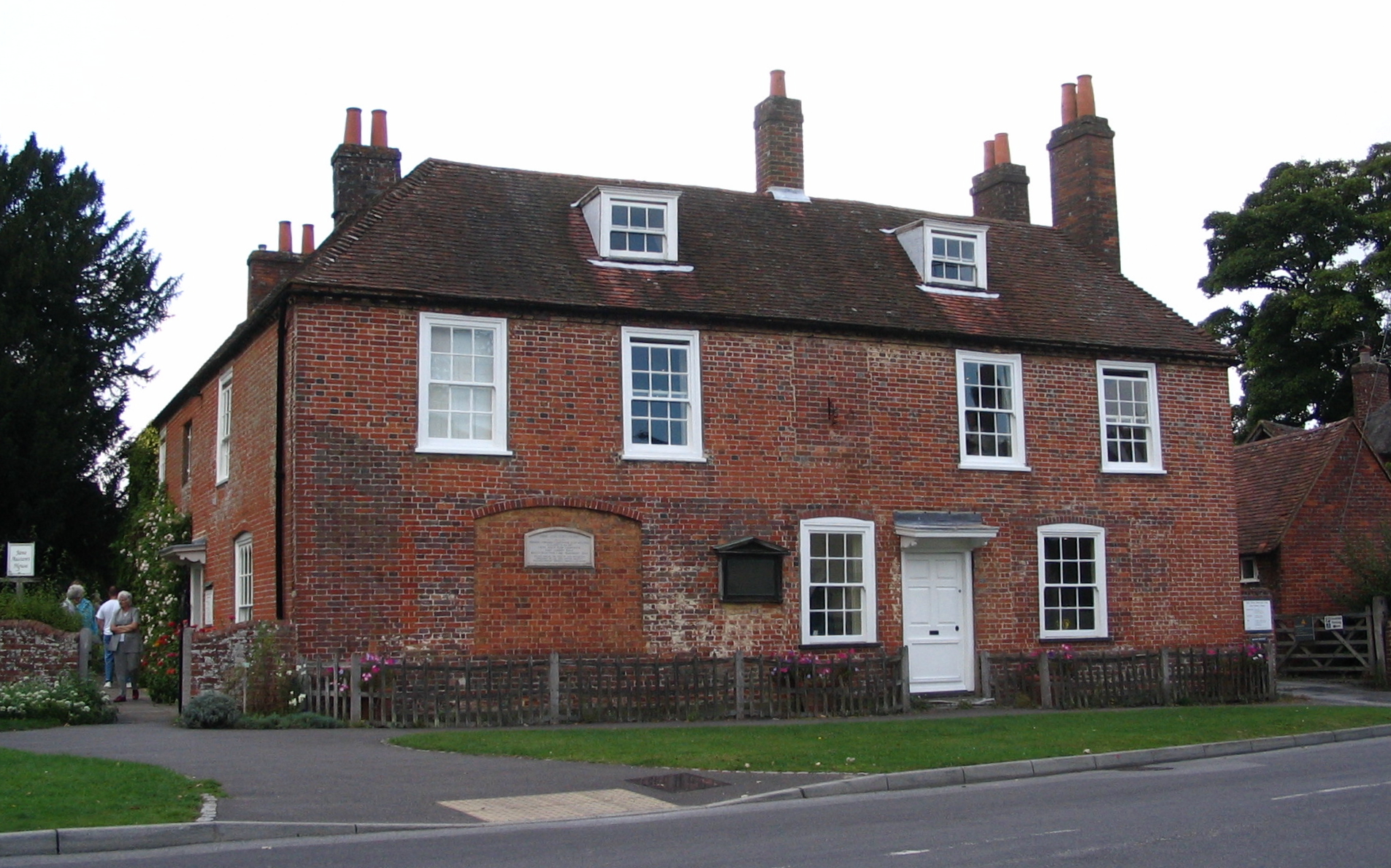
When Jane Austen was 33 years old, she took possession of a cottage in the village of Chawton, which had been a gift from her brother Edward. Our Friday Favorite this week is not one but two virtual tours of this cottage.
The first deals mainly with the exterior of the house, and comes to us via Jane Austen’s World right here on WordPress: http://janeaustensworld.wordpress.com/2013/05/24/a-pictorial-visit-to-chawton/
The second deals mainly with the interior of the house, courtesy of the Jane Austen’s House Museum in Chawton: http://www.jane-austens-house-museum.org.uk/about/house_tour.htm
“A man who informs or turns king’s evidence.”
Kensington Palace through a visitor’s eyes.
Friendship is a single soul dwelling in two bodies.
–Aristotle
http://www.ucmp.berkeley.edu/history/aristotle.html
Description (from Amazon):
“It was whispered all through London Society that Ian Mackenzie was mad, that he’d spent his youth in an asylum, and was not to be trusted–especially with a lady. Yet Beth found herself inexorably drawn to the Scottish lord. Despite his decadence and his intimidating intelligence, she could see that he needed help–her help. Because suddenly the only thing that made sense to her was…the madness of Lord Ian Mackenzie.”
Set in Victorian England, France, and Scotland, this book at first looks to be like any other historical romance novel. Except that the hero–Lord Ian Mackenzie–appears to have what today we’d call Asperger’s Syndrome. And the heroine–Beth Ackerley–grew up in a workhouse for the poor.
And that’s where everything changes.
A lot of readers have already discovered this book, but for those of you that haven’t, put this one at the top of your TBR list. 🙂

“A coach drawn by three horses.”
It’s been a while since I posted to this blog on a regular basis, and I’m afraid I never introduced myself properly in the first place. Oh, sure, there’s the “official” bio on the About page, and all my contact links appear if you click on my picture to the left. But that’s only a small part of who I am.
By day I am a high school teacher—not in English or in History, as most people would assume, but in Mathematics and Psychology. I majored in History because I  loved it (still do, more than any other subject). But by the time I realized my place in the world was in a classroom, I had half of an engineering degree completed…including a whole bunch of math. And so I’ve been teaching high school math for the last 10 years. Psychology was kind of an accident–it was part of the position when I applied, and no one wants to take it over. I’m okay with that, though, because it’s actually a really fun class! And I can’t even count how many times I’ve had an insight into one of my characters while teaching a lesson.
By night—and on weekends, school vacations, and over the summer—I’m a writer. I love books of all kinds, and get ideas in a bunch of different genres, but my  specialty is historical romance. Right now I’m working on the first book in a Regency series that focuses on three brothers and their attempts (consciously done or otherwise) to reunite with the women they loved, but lost. Some parts (mostly the big things) are progressing well. Some parts (mostly the little details) are taking forever. I have no representation or publisher, just two wonderful critique partners and a fabulous circle of friends who support me as I muddle through 🙂
At all times, I’m a patient with three chronic illnesses. I have doctors and medications to help me along and regulate many of my symptoms, but one thing I never seem to have enough of is energy. Most of it is spent at school with my students, their parents, and my fellow educators. Tasks are prioritized not just by due date, but by size and the amount of effort required of me for each one. I’m very careful to watch my schedule, weighing each invitation and event against the big picture, and what it will cost me physically to go. I write more slowly, don’t devote as much time to social media, take longer to research things because of my health. But when I get published, the victory will be all the sweeter because I worked so hard to get there.
Most of my posts here will be history-related, focusing on the Regency period (because that’s what I’m writing) but including anything else I find interesting. Some posts will deal with writing, or the life of an as-yet-unpublished writer. Occasionally I’ll post about other things: school, my personal life, my illnesses, sports, Psychology, how the hero of my first novel is like Batman (yes, really!). Whatever the subject, I hope to inform and entertain. And I hope you’ll keep coming back for more 😀

