Pitch-Kettled
“Stuck fast, confounded.”
…or in my case, like it’s 1813 🙂
I must make a confession to you this week: I would have been a miserable failure amongst the ton. I’m practically the definition of bluestocking, for one thing. I also have brown hair and freckles (skillfully covered by good powder in my profile pic). I’m descended from a long line of laborers, tradesmen, and those who work for a living.
And I have very little fashion sense.
I make a good effort in the classroom, because if I look foolish or frumpy my teenaged students will focus on my clothing instead of the lesson. I’m careful not to look ragged when I go out in public, too—mostly because I live in the same area as my students, but it’s also good practice for when I’m a huge, famous author 🙂
These last months, though, I’ve been focusing on Regency fashion. The Historical Novel Society is having their annual conference this coming weekend (which I’m attending), and one of their events is a costume pageant (which I absolutely had to participate in). But how does one put together a 200-year-old outfit in a tiny little town?
A lot of people dig up an old pattern, and put needle and thread to fabric. But my sewing skills are limited to reattaching buttons, so I hit the internet looking for costume shops. I found Matti’s Millinery and Costumes, a store run by a pair of ladies who do costume work for theater groups and reenactors. The have medieval and renaissance wear, Victorian and Edwardian pieces, and a big old section of Regency gear.
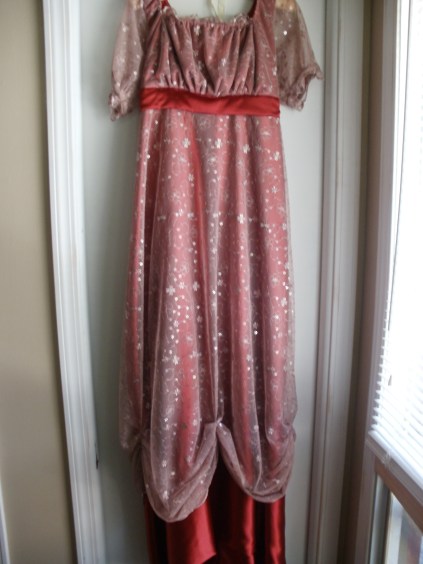
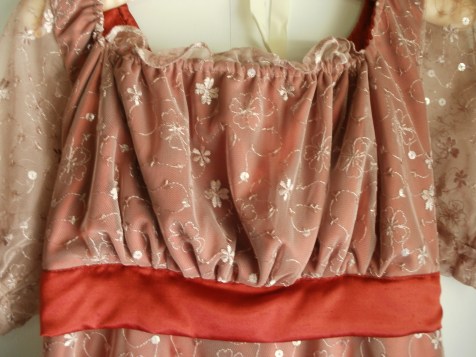
After some careful consideration, I settled on a beautiful copper-colored satin evening gown, with an embroidered net overdress (pictured in it’s entirety above, bodice detail below). It’s got the empire waist typical of the Regency, the long flowing skirt (no panniers or bustle to mar the smooth line—or make moving difficult). It’s not the white or pastel that a young miss would wear (because, let’s face it, at my age in that time period, I’d be firmly on the shelf).
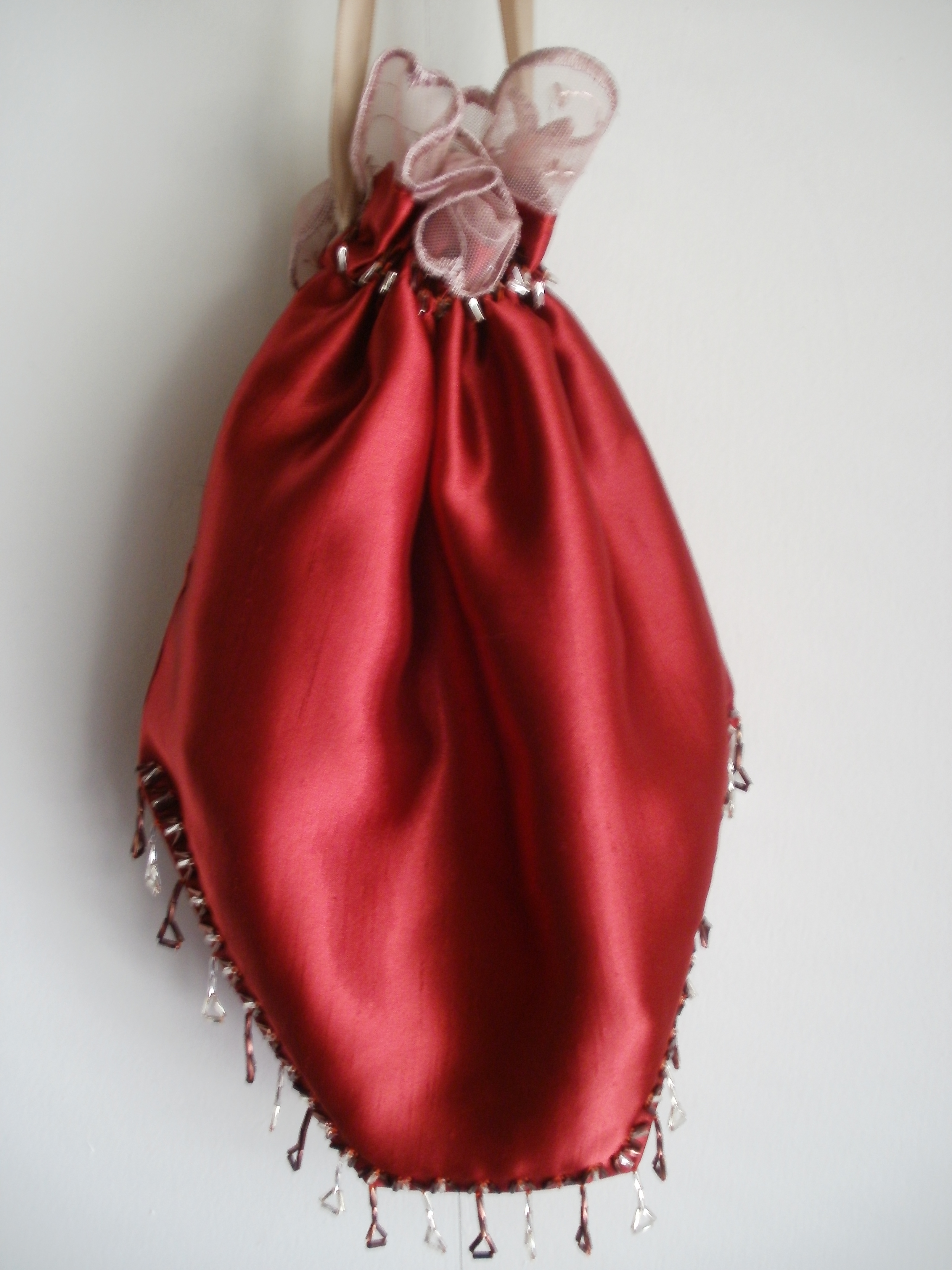
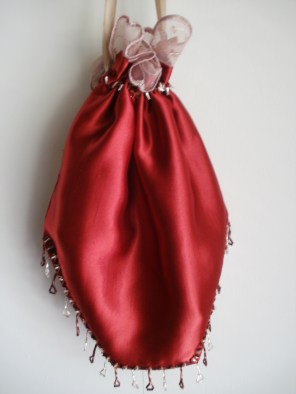
Then, just as now, a lady’s ensemble wasn’t complete without a handbag, and the wonderful ladies at Matti’s made one for me out of material left over from the gown. It’s large enough to hold all my 21st Century things (camera, business cards, lip balm, medication, etc), but totally period appropriate.
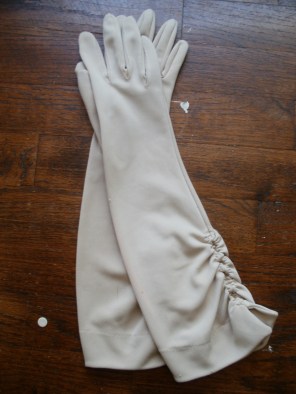
I even hunted down a pair of gloves that weren’t made of stretchy nylon, or intended for wear by girls going to prom. I didn’t want white gloves, either—while rather ubiquitous, everything about my dress is shades of copper and tan, and I think white would have looked out of place. But I found this lovely pair of beige evening gloves from the early 1960s on e-bay. They arrived in rather appalling condition, but cleaned up nicely.
I’m not wearing period appropriate shoes (my black flats from Payless will have to do this time), nor am I wearing silk stockings (not in Florida in late June). So the only thing left is to figure out what to do with my hair. And here I’m stuck. My hair is too long (and frizzy in the humidity) to leave down, but it’s too short for an elaborate updo (see my profile picture). And I’ll have to be able to do it myself (eek!).
Suggestions?
Children are the anchors that hold a mother to life.
–Sophocles
Okay, all you Art History majors out there–here’s a chance to get your geek on. Our Friday Favorite this week is an interactive art exhibit from 1813:
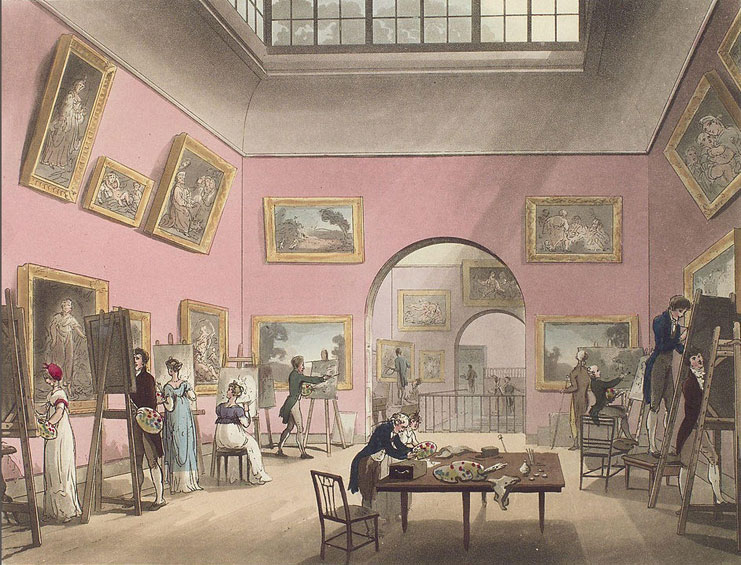
“On 24 May 1813, Jane Austen visited an art exhibit at the British Institution in Pall Mall, London. The popular show was the first-ever retrospective of the works of Sir Joshua Reynolds (1723-1792), England’s celebrated portrait painter. Two centuries later, this e-gallery offers the modern visitor a historical reconstruction of that long-lost Regency blockbuster.”
Clicking on a painting opens a new window with a whole host of information: the painting’s title in 1813 and its title now, its current location, some juicy tidbits about the subject of the portrait, and its connections to other paintings in the exhibit. There are also suggestions for further reading.
I love technology, but for this giveaway I went old school and put everyone’s names in a basket. Whose name did I draw?
Congratulations to Denise Duvall! She’s the winner of a signed copy of The Soldier by Grace Burrowes!
Thanks to everyone who dropped by to read and/or leave a comment 😀
Written by Isobel Carr, multi-published author of Georgian-set historical romances. Published in The Regency Reader, June 2013. Reproduced with permission.
Several years ago I made a Regency paper doll for the Beau Monde’s annual Regency writer conference. I’ve recently uploaded her to my website, where she can be downloaded for free.
One of the reasons I chose to make her is that paper dolls were a popular period toy during the Regency. Most examples I’ve seen came in a box, often with a small book that tells a story. The story is usually one of improvement (little girls learning to be demure and ladylike, little boys learning to be brave). But other examples are a simple sheet of paper which might have been printed in a magazine or sold as a broadsheet. The oldest examples in museums are French and date to the 1780s.
An English example marked “Pub. Dec 20 1791 by J. Wallis No 16 Ludgate Street”:

Some of the first mass produced ones were made in London in 1810 by S&J Fuller. Little Henry was off to a series of adventures that included being a drummer boy, a sailor, an urchin and what look to me like a chimney sweep (not an adventure I would want to have had!). Little Fanny doesn’t get “adventures” per her packaging; she merely gets a “history” in which she can be a darling of the rich, a beggar girl, and several iterations of country girl (basket of eggs, etc.). Like so many books they were quickly plagiarized. By 1812 a knock off version Little Henry was being printed in America by J. Belcher of Boston.
Little Henry, 1810:

Little Fanny, 1810:

Other popular styles included fairytales and historical lessons. Some came with backdrops or were meant to be used in small paper theatres to act out plays.
Cinderella, c. 1814

This example is English, and was produced shortly after George IV was crowned; it’s a collection of kings with short lessons about them:

I hope you enjoyed seeing these historic examples and I hope you (or your children) enjoy playing with Harriet!
The whole worth of a kind deed lies in the love that inspires it.
–The Talmud
Do you ever find modern men’s fashion lacking? Like your men in cravats and frock coats, or doublets and hose? Then this week’s Friday Favorite is for you! It’s a fan video with clips from a whole bunch of period dramas featuring all the best in historical menswear, accompanied by Jo Dee Messina’s cover of Sharp Dressed Man.
I tagged a few of the gentlemen in question–can you identify the rest?