Think of all the beauty still left around you and be happy.
–Anne Frank

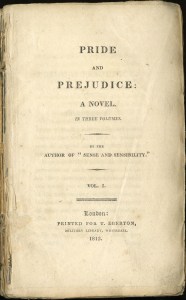
Our Favorite this week is a bit of an odd duck. Whoever thought that the United States Supreme Court would be citing Pride and Prejudice in one of its decisions? Well, on January 13, 2015 it did.
It was a case where a bank robber fleeing from the scene broke into a woman’s home and “guided a terrified Parnell from a hallway to a room a few feet away, where she suffered a fatal heart attack.” This bank robber (Whitfield) was convicted of (among other things) forcing the woman to accompany him–which increased the penalties he’d face. He was appealing based on the definition of the word “accompaniment”, which is used in the statute he was convicted of violating.
This is (in part) what the Court decided:
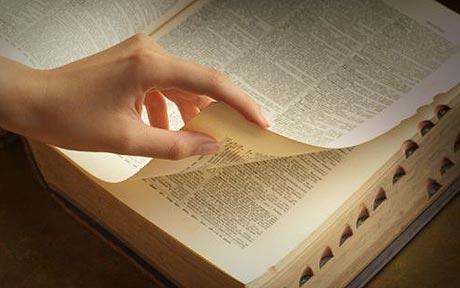
In 1934, just as today, to “accompany” someone meant to “go with” him. See Oxford English Dictionary 60 (1st ed. 1933) (defining “accompany” as: “To go in company with, to go along with”). The word does not, as Whitfield contends, connote movement over a substantial distance. It was, and still is, perfectly natural to speak of accompanying someone over a relatively short distance, for example: from one area within a bank “to the vault”; “to the altar” at a wedding; “up the stairway”; or into, out of, or across a room. English literature is replete with examples. See, e.g., C. Dickens, David Copperfield 529 (Modern Library ed. 2000) (Uriah “accompanied me into Mr. Wickfield’s room”); J. Austen, Pride and Prejudice 182 (Greenwich ed. 1982) (Elizabeth “accompanied her out of the room”).
Interesting, isn’t it? 😀
You can check out the full text of the decision here.
January 19, 1812: After a ten day siege, the Duke of Wellington orders British soldiers of the Light and Third divisions to storm Ciudad Rodrigo.
January 20, 1783: Great Britain signs a peace treaty with France and Spain, officially ending hostilities in the American War of Independence.
January 21, 1793: Louis XVI of France is executed by guillotine.
January 22, 1506: The first contingent of Swiss Guards arrives at the Vatican.
January 23, 1849: Elizabeth Blackwell is awarded an M.D., becoming the first female doctor in the US.
January 24, 1857: The University of Calcutta is founded.
January 25, 1858: Queen Victoria’s daughter Victoria marries Friedrich of Prussia, using Felix Mendelssohn’s The Wedding March as part of the ceremony.
Since we cannot know all that there is to be known about anything, we ought to know a little about everything.
–Blaise Pascal
http://www.britannica.com/EBchecked/topic/445406/Blaise-Pascal

First published in 1818, Mary Shelley’s Frankenstein has been adapted and re-adapted dozens of times. And this week’s favorite is the newest–an audiobook dramatization featuring Arthur Darvill as Victor Frankenstein and Nicholas Briggs as Frankenstein’s Creature. It’s available as a download or a collection of CDs at the Big Finish website for both US and UK listeners (I’m not sure about other countries–if you try it, let me know).
Check out the trailer:
January 12, 1808: The organizational meeting that led to the creation of the Wernerian Natural History Society (a former Scottish learned society) is held in Edinburgh.
January 13, 1785: John Walter publishes the first issue of the Daily Universal Register, later renamed The Times.
January 14, 1814: Frederick VI of Denmark cedes Norway to Sweden in return for Pomerania in the Treaty of Kiel.
January 15, 1759: The British Museum opens.
January 16, 1809: The British defeat the French at the Battle of La Coruña.
January 17, 1773: Captain James Cook and his crew become the first Europeans to sale below the Antarctic Circle.
January 18, 1788: The first elements of the First Fleet carrying 736 convicts from England to Australia arrives at Botany Bay.
Music washes away from the soul the dust of everyday life.
–Berthold Auerbach
http://www.britannica.com/EBchecked/topic/42649/Berthold-Auerbach

Ever wonder how to make Georgian ices? Or what an English plateau dessert looks like? Our Favorite this week can tell you that and more.
Historic Food is the website of Ivan Day, a noted food historian and professional cook. The site has tons of pictures from both period books and recreations of historic dishes. There are even recipes from original cookbooks, complete with modern explanations and background information.