
Regency, This Week In History

This Week In History: April 27-May 3

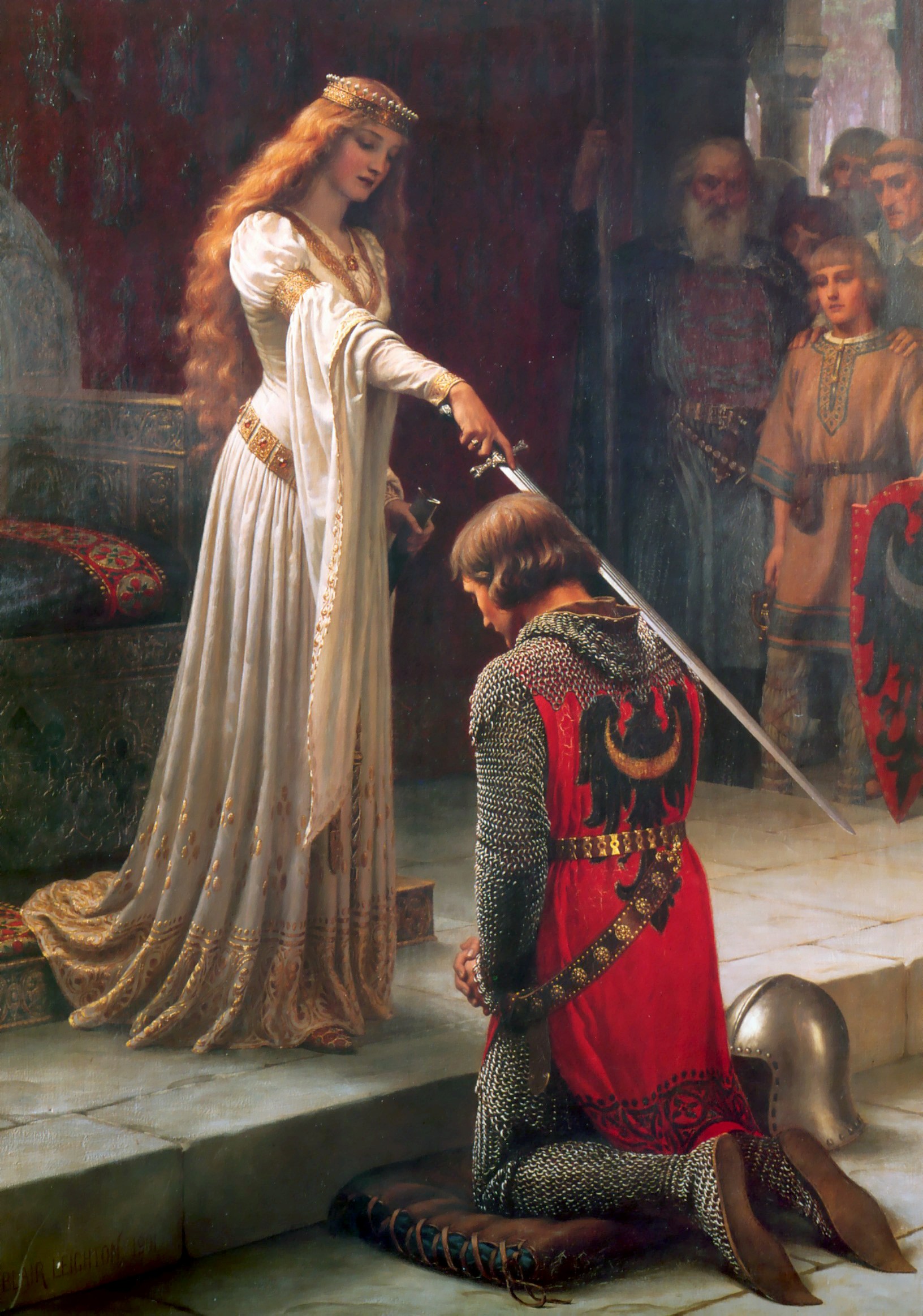
Accolade_by_Edmund_Blair_Leighton


April 27, 1813: US Troops capture the capital of Upper Canada in the Battle of York (now Toronto).


April 28, 1789: The Mutiny on the Bounty occurs when Lieutenant William Bligh and 18 sailors are set adrift by a rebellious crew.


April 29, 1770: James Cook arrives at and names Botany Bay, Australia.


April 30, 1803: The United States purchases the Louisiana Territory from France for $15 million.


May 1, 1786: Opening night of Mozart’s opera The Marriage of Figaro in Vienna, Austria.


May 2, 1808: The people of Madrid rise up in rebellion against French occupation at the beginning of the Peninsular War.


May 3, 1802: Washington, DC is incorporated as a city.



Regency, This Week In History

This Week In History: April 20-26

Accolade_by_Edmund_Blair_Leighton


April 20, 1657: Freedom of religion is granted to the Jews of New Amsterdam (later New York City).


April 21, 753 BC: The traditional date of the foundation of Rome by Romulus and Remus.


April 22, 1889: At noon, thousands rush to claim land in the Land Run of 1889. Within hours, the cities of Oklahoma City and Guthrie are formed with populations of at least 10,000.


April 23, 1815: The Second Serbian Uprising erupts after the annexation of the country to the Ottoman Empire.


April 24, 1800: The US Library of Congress is established when President John Adams signs legislation to appropriate $5,000 to purchase “such books as my be necessary for the use of Congress”.


April 25, 1792: La Marseillaise (the French national anthem) is composed by Claude Joseph Rouget de Lisle.


April 26, 1803: Thousands of meteor fragments fall from the sky over L’Aigle, France.


Regency, This Week In History

This Week In History: April 13-19

Accolade_by_Edmund_Blair_Leighton


April 13, 1742: George Frideric Handel’s oratorio Messiah makes its world-premiere in Dublin, Ireland.


April 14, 1828: Noah Webster copyrights the first edition of his dictionary.


April 15, 1802: William Wordsworth sees a “long belt” of daffodils with his sister Dorothy, inspiring him to write I Wandered Lonely as a Cloud.


April 16, 1746: The Battle of Culloden is fought in Scotland between French-supported Jacobites and British Hanovarian forces.


April 17, 1797: Citizens of Verona, Italy begin an eight-day rebellion against the French occupying forces.


April 18, 1506: The cornerstone of the current St. Peter’s Basilica is laid.


April 19, 1855: Visit of Napoleon III to Guildhall, London.


Regency, This Week In History

This Week In History: April 6-12

Accolade_by_Edmund_Blair_Leighton


April 6, 1808: John Jacob Astor incorporates the American Fur Company, which would eventually make him America’s first millionaire.


April 7, 1827: John Walker, and English chemist, sells the first friction match.


April 8, 1820: The Venus de Milo is discovered on the Aegean island of Melos.


April 9, 1511: St. John’s College, Cambridge, England (founded by Lady Margaret Beaufort) receives its charter.


April 10, 1815: The Mount Tambora volcano begins a three-month-long eruption, lasting until July 15.


April 11, 1814: The Treaty of Fontainebleau ends the War of the Sixth Coalition against Napoleon.


April 12, 1606: The Union Flag is adopted as the flag of Great Britain.


Regency, This Week In History

This Week In History: March 30-April 5

Accolade_by_Edmund_Blair_Leighton


March 30, 1863: Danish Prince Wilhelm Georg is chose as King George of Greece.


March 31, 1889: The Eiffel Tower is officially opened.


April 1, 1826: Samuel Morey patents the internal combustion engine.


April 2, 1800: Beethoven leads the premiere of his First Symphony in Vienna.


April 3, 1860: The first successful US Pony Express run from St. Joseph, Missouri to Sacramento, California begins.


April 4, 1814: Napoleon abdicates for the first time.


April 5, 1804: The first recorded meteorite in Scotland falls in Possil.


Regency, This Week In History

This Week In History: March 23-29

Accolade_by_Edmund_Blair_Leighton


March 23, 1775: Patrick Henry delivers his famous “Give me Liberty, or give me Death!” speech at St. John’s Church in Richmond, Virginia.


March 24, 1707: The Acts of Union 1707 is signed, officially uniting the Kingdoms of England and Scotland to create the Kingdom of Great Britain.


March 25, 1811: Percy Bysshe Shelley is expelled from the University of Oxford for publishing the pamphlet The Necessity of Atheism.


March 26, 1812: An earthquake destroys Caracas, Venezuela.


March 27, 1854: The United Kingdom declares war on Russia, entering the Crimean War.


March 28, 1809: Heinrich Wilhelm Mattaus Olbers discovers 2 Pallas, the second asteroid known to man.


March 29, 1849: The United Kingdom annexes the Punjab.


Regency, This Week In History

This Week In History: March 16-22

Accolade_by_Edmund_Blair_Leighton


March 16, 1815: Prince Willem of the House of Orange-Nassau proclaims himself King of the United Kingdom of the Netherlands, the first constitutional monarch in the Netherlands.


March 17, 1805: The Italian Republic (with Napoleon as president) becomes the Kingdom of Italy (with Napoleon as King).


March 18, 1834: Six farm laborers from Tolpuddle, Dorset, England are sentenced to be transported to Australia for forming a trade union.


March 19, 1812: The Spanish Constitution of 1812 is established by Spain’s first national sovereign assembly.


March 20, 1815: Napoleon enters Paris with 140,000 regular troops and approximately 200,000 volunteers, beginning his Hundred Days.


March 21, 1801: The Battle of Alexandria is fought between British and French forces near the ruins of the Nicopolis in Egypt.


March 22, 1809: Charles XIII succeeds Gustav IV Adolf to the Swedish throne.