Society

So You Think You Know St. George’s

I’m having some migraine issues and my computer time is pretty limited for a while, so I thought I’d share an article I wrote a while back when I was blogging for Teatime Romance. It’s one of my favorites!

Many a Regency romance ends with a great society wedding at St. George’s in Hanover Square…but how much do you know about the famed church?
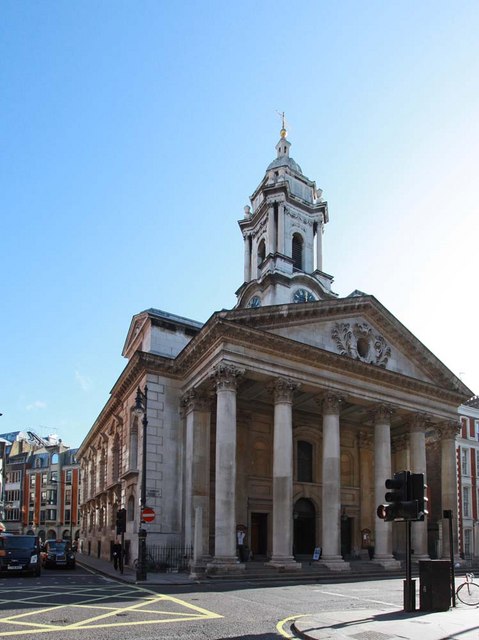
St. George's

1. The Parish Church of St. George was completed in what year?

    1. 1711
    2. 1716
    3. 1725
    4. 1731

Answer: C  St. George’s was part of the Fifty New Churches Act passed in 1711, but wasn’t until 1720 that a location was approved and a design was chosen.  The first stone was laid in 1721 and the building was certified complete on March 20, 1725. Three days later it was consecrated by the Bishop of London.

2. What denomination is St. George’s?

    1. Catholic
    2. Anglican
    3. Lutheran
    4. Presbyterian

Answer: B  St. George’s is an Anglican (Church of England) church, part of the Diocese of London. It is the parish church of Mayfair.

3. Which American president was married at St. George’s?

    1. Teddy Roosevelt
    2. Franklin Roosevelt
    3. Woodrow Wilson
    4. Andrew Jackson

Answer: A  Teddy Roosevelt married his childhood sweetheart Edith Kermit Carow in 1886. He took a room at Brown’s Hotel in Dover Street to meet the residency requirement, and remains the only American president to be married at St. George’s. His wedding also inspired many other Americans to marry at the church.
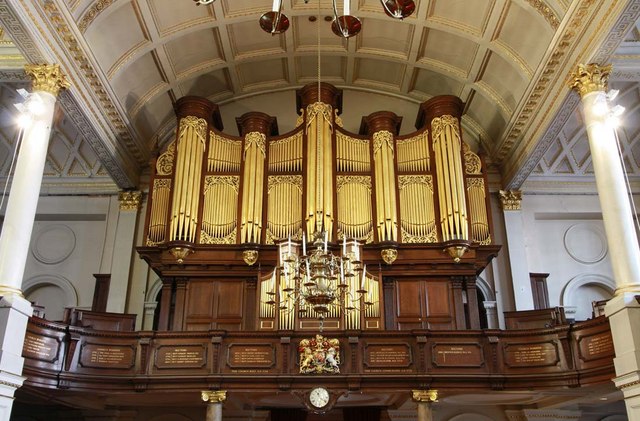
St. George's organ4. According to tradition, St. George was a native of Asia Minor.  When did he become the patron saint of England?

    1. The sixth century
    2. The ninth century
    3. The eleventh century
    4. The thirteenth century

Answer: C  A vision of St. George (along with St. Demetrius) spurred on the Norman troops at the battle of Antioch during the First Crusade in 1098. The Normans won the battle, and adopted St. George as their patron.

5. Which famous composer was a regular worshiper at St. George’s?

    1. Handel
    2. Brahms
    3. Bach
    4. Purcell

Answer: A  George Friderick Handel emigrated to London from his native Germany in 1724, purchasing a house in Brook Street just as the church was nearing completion. His opinion was sought on the suitability of the organ when it was being installed, and he provided the music for the testing of candidates to play it. In 1726 he became a naturalized British citizen, attending services at St. George’s until he died in 1759.

So how did you do? What fact surprised you most?

Want to learn more about St. George’s? Visit their website at http://www.stgeorgeshanoversquare.org/Default.aspx

 

Friday Favorites, Military

Friday Favorite: HMS Acasta Letters at the Jane Austen Festival

Ever want to get involved in a historical reenactment but didn’t know how? Or think you didn’t have time for all the preparation? Afraid you’ll get stage fright and forget what to do?

Then here’s a simple opportunity to participate in the Jane Austen Festival in Kentucky without all the hassle or expense of travel–write a historical letter to a Royal Navy sailor!

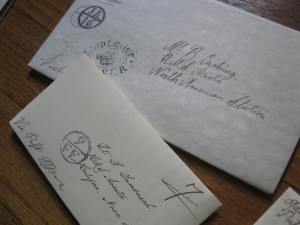
historical letters

From the HMS Acasta website:

Open Call to ALL Reenactors, Historians and Creative Writers!
The Royal Navy reenacting group that represents HMS Acasta will be attending the Jane Austen Festival in July of this year. One of the things that I’d like to be able to do is deliver a ‘mail packet’ full of letters to the various Acasta members. This is a project that I have undertaken in the past with other groups with awesome results.

This is where YOU come in!

Anyone who would like to submit a period correct letter to add to the packet is encouraged to do so! We’d love to have your contribution, however large or small! Anything added to the packet will help to enhance the historical experience for not only the Acastas who receive them, but for the public who will attend the Festival as well.”

There are ideas, links to examples of period-style letters, and specific sailors to write to on the Acasta website. Deadline is the end of June 2014.

Society

Regency Customs: Using the Social Call to Change a Story Line

Award-winning Regency romance author–and fellow teacher–Regina Jeffers talks about the etiquette of social calls, and how Jane Austen used them as a pivot point in her novels. 

callingcards

In the 1800s, morning calls or visiting upon a household developed a certain protocol, and those who broke protocol were often shunned. First a calling card was presented to the household’s servant. It was common for those who came to London for the Season to drive about with a footman in tow to present one’s cards to acquaintances. Do you recall Mrs. Jennings doing so in Sense and Sensibility? “The morning was chiefly spent in leaving cards at the houses of Mrs. Jennings’s acquaintance to inform them of her being in town.”

One would leave three cards with the servant: one from the lady for the house’s mistress; one from the caller’s husband for the house’s mistress and another for the house’s master. Displaying cards of those who had called was commonplace. It gave one social status to display cards from those of the nobility. In Persuasion, the Elliots took care to display “…the cards of the Dowager Viscountess Dalrymple and the Hon. Miss Carteret, to be arranged where they might be most visible.”

Read the rest of the article here.

Fashion, Friday Favorites

Friday Favorite: DeviantArt Regency Dress Up Doll

A few months ago, I shared Isobel Carr’s article on Regency-era paper dolls. This week’s Favorite is the 21st Century version.

Created by Sarah Vaughn (aka savivi) for DeviantArt, Regency Dress Up Doll is basically an electronic version of the old paper doll. The outfits and their accessories are all inspired by Jane Austen’s novels and the moves they spawned. You can change facial features and hair styles, too!

And if you prefer Ken to Barbie, the same artist has a Regency Hero Dress Up Doll…with period accurate underclothing 😀

Regency Dress Up Doll