Caudge-Pawed
“Left-handed.”

“Left-handed.”
I love technology, but for this giveaway I went old school and put everyone’s names in a basket. Whose name did I draw?

Congratulations to Denise Duvall! She’s the winner of a signed copy of The Soldier by Grace Burrowes!
Thanks to everyone who dropped by to read and/or leave a comment 😀
Written by Isobel Carr, multi-published author of Georgian-set historical romances. Published in The Regency Reader, June 2013. Reproduced with permission.
Several years ago I made a Regency paper doll for the Beau Monde’s annual Regency writer conference. I’ve recently uploaded her to my website, where she can be downloaded for free.
One of the reasons I chose to make her is that paper dolls were a popular period toy during the Regency. Most examples I’ve seen came in a box, often with a small book that tells a story. The story is usually one of improvement (little girls learning to be demure and ladylike, little boys learning to be brave). But other examples are a simple sheet of paper which might have been printed in a magazine or sold as a broadsheet. The oldest examples in museums are French and date to the 1780s.
An English example marked “Pub. Dec 20 1791 by J. Wallis No 16 Ludgate Street”:

Some of the first mass produced ones were made in London in 1810 by S&J Fuller. Little Henry was off to a series of adventures that included being a drummer boy, a sailor, an urchin and what look to me like a chimney sweep (not an adventure I would want to have had!). Little Fanny doesn’t get “adventures” per her packaging; she merely gets a “history” in which she can be a darling of the rich, a beggar girl, and several iterations of country girl (basket of eggs, etc.). Like so many books they were quickly plagiarized. By 1812 a knock off version Little Henry was being printed in America by J. Belcher of Boston.
Little Henry, 1810:

Little Fanny, 1810:

Other popular styles included fairytales and historical lessons. Some came with backdrops or were meant to be used in small paper theatres to act out plays.
Cinderella, c. 1814

This example is English, and was produced shortly after George IV was crowned; it’s a collection of kings with short lessons about them:

I hope you enjoyed seeing these historic examples and I hope you (or your children) enjoy playing with Harriet!
The whole worth of a kind deed lies in the love that inspires it.
–The Talmud
http://www.merriam-webster.com/dictionary/talmud

Do you ever find modern men’s fashion lacking? Like your men in cravats and frock coats, or doublets and hose? Then this week’s Friday Favorite is for you! It’s a fan video with clips from a whole bunch of period dramas featuring all the best in historical menswear, accompanied by Jo Dee Messina’s cover of Sharp Dressed Man.
I tagged a few of the gentlemen in question–can you identify the rest?
“A wild, thoughtless, rattling fellow.”
No, that’s not a typo. This article is not about Napoleon’s victories on the battle fields of Europe. It’s about his victory in the farmers’ fields in France.
With sugar beets.

Sugar beets (Beta vulgaris) are white, conical roots, with a rosette of leaves above ground. The leaves absorb sunlight and produce sugar by photosynthesis (remember your high school biology?). The sugar is then stored in the root—the part we dig up and process. Sugar beets are grown in temperate climates like Germany, France, the UK, and the northern US, rather than the tropical locales sugar cane prefers.
But what do they have to do with the self-proclaimed Emperor of France?
In 1806 Napoleon attempted to destroy British trade lines and weaken the country by banning the import of British goods into Europe (including those from Britain’s colonies). George III and his Parliament responded by ordering a blockade of all French ports. So the only goods Napoleon and his people were getting (legally) were those they could grow or make themselves. Since all of the sugar in use at the time came from plantations in the West Indies, that meant no sugar for France.
Yikes!
Sugar beets were already known at this time—in the mid-1700’s, a German chemist named Andreas Margraff discovered that the sucrose contained in the beet’s root was indistinguishable from the sucrose in sugar cane. One of Margraff’s students, Franz Karl Achard, later experimented with ways to extract the sugar from beets, and was successful (he’s now considered the father of the sugar beet industry).
So when France found herself sugarless in the first decade of the 1800’s, a starting point already existed for her scientists. In 1809, a commission repeated Achard’s experiments, producing two loaves of beet sugar. One of them was eventually passed on to Napoleon himself, who realized he held the answer to his problem (one of them, anyway). He ordered 32,000 hectares of sugar beets to be sown, and more than 40 small factories were built to process them. In January 1811, the order was upped to 100,000 hectares and licenses were given to build 334 factories throughout the French empire.
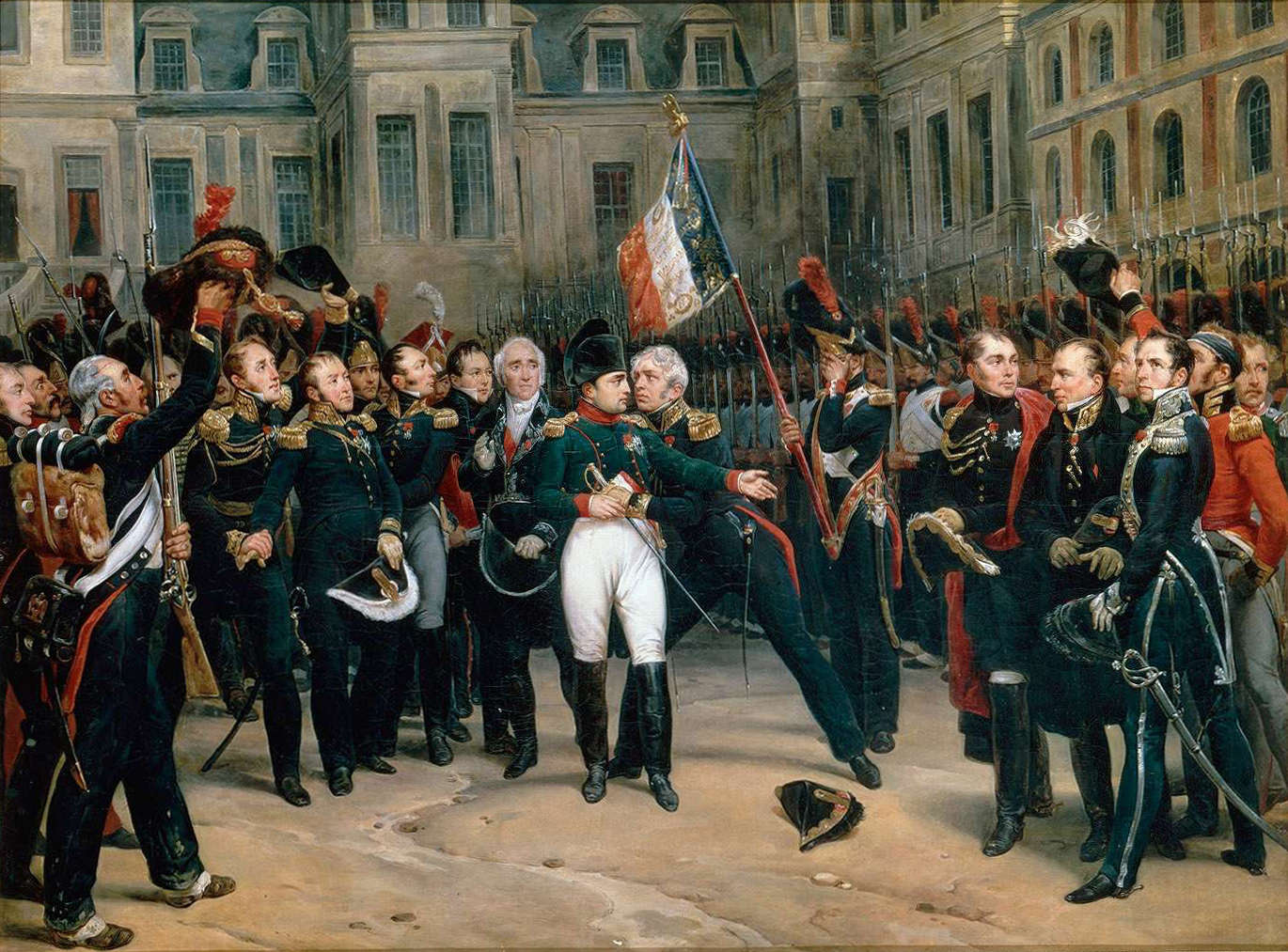
In 1813, however, the tide of the war turned. Napoleon was on the run, and the blockade was lifted. Cane sugar once again became readily available, and beet sugar was no longer competitively priced. All of the beet processing factories that had been built in Germany and Austria (part of Napoleon’s territory) were closed down. The following spring the Sixth Coalition defeated the French empire, and Napoleon—champion of the sugar beet—was exiled to the island of Elba.
Then why do we eat beet sugar today?
France never quite gave up on sugar beet refinement. Between 1820 and 1839, the number of factories began to slowly climb again in response to a duty imposed on imported cane sugar. Once again, beet sugar was a cheaper alternative. The production of cane sugar also had an ugly stigma attached—it was only possible on large plantations using slave labor. Sugar beets could be grown and processed right at home, in factories that employed paid workers.
The process of refining sugar beets later became popular in Germany, the UK, Russia, and even spread across the Atlantic to the US. My home state of Michigan is one of eleven states that continue to produce beet sugar today, though the European Union is the world’s largest producer with about 50% of the total. Overall, beet sugar accounts for about 35% of the world’s production.
Beet sugar: just one example of the silver lining on a very dark cloud.

Another silver lining of the Napoleonic Wars? Wounded warrior romance heroes! To celebrate the Summer Banquet Blog Hop, I’m giving away one of my very favorites: a signed, print copy of Grace Burrowes’ The Solider, direct from the author herself!
Leave a comment below to enter: tell me what you learned today, what you really think of Napoleon, who your favorite historical soldier/sailor is, what draws you to this period of history, your obsession with sweets (or wounded warriors!), or whatever else you’d like.
Comments must be left by midnight EDT on June 7, 2013 to be eligible to win. Open worldwide.
Don’t forget to check out the posts and giveaways of all the Hop participants:
—
Sources:
Agribusiness Handbook: Sugar Beets. Food and Agricultural Organization, United Nations. 2009
Agriculture and Rural Development. European Commission. 2013.
Bonaparte, Napoleon. The Berlin Decree. November 21, 1806.
Draycott, A. Philip (editor). Sugar Beet (World Agricultural Series). John Wiley & Sons, 2008.
Harveson, Robert M. “History of Sugarbeet Production and Use.” Crop Watch: Sugarbeets, University of Nebraska-Lincoln. Retrieved electronically May 2013.
Two things only a man cannot hide: that he is drunk and that he is in love.
–Antiphanes
http://www.1911encyclopedia.org/Antiphanes
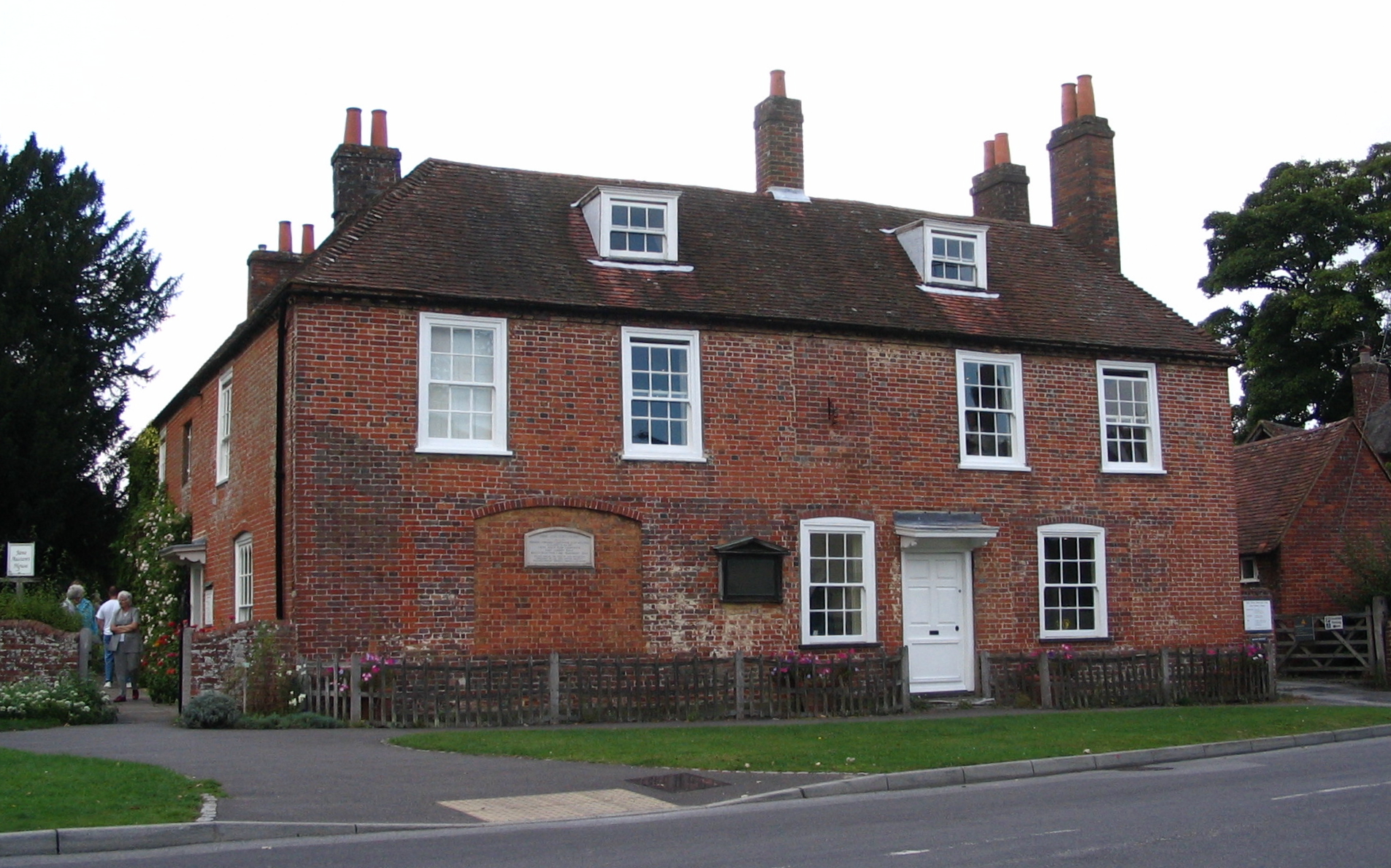
When Jane Austen was 33 years old, she took possession of a cottage in the village of Chawton, which had been a gift from her brother Edward. Our Friday Favorite this week is not one but two virtual tours of this cottage.
The first deals mainly with the exterior of the house, and comes to us via Jane Austen’s World right here on WordPress: http://janeaustensworld.wordpress.com/2013/05/24/a-pictorial-visit-to-chawton/
The second deals mainly with the interior of the house, courtesy of the Jane Austen’s House Museum in Chawton: http://www.jane-austens-house-museum.org.uk/about/house_tour.htm
“A man who informs or turns king’s evidence.”
 Cora Lee, Regency Romance Author